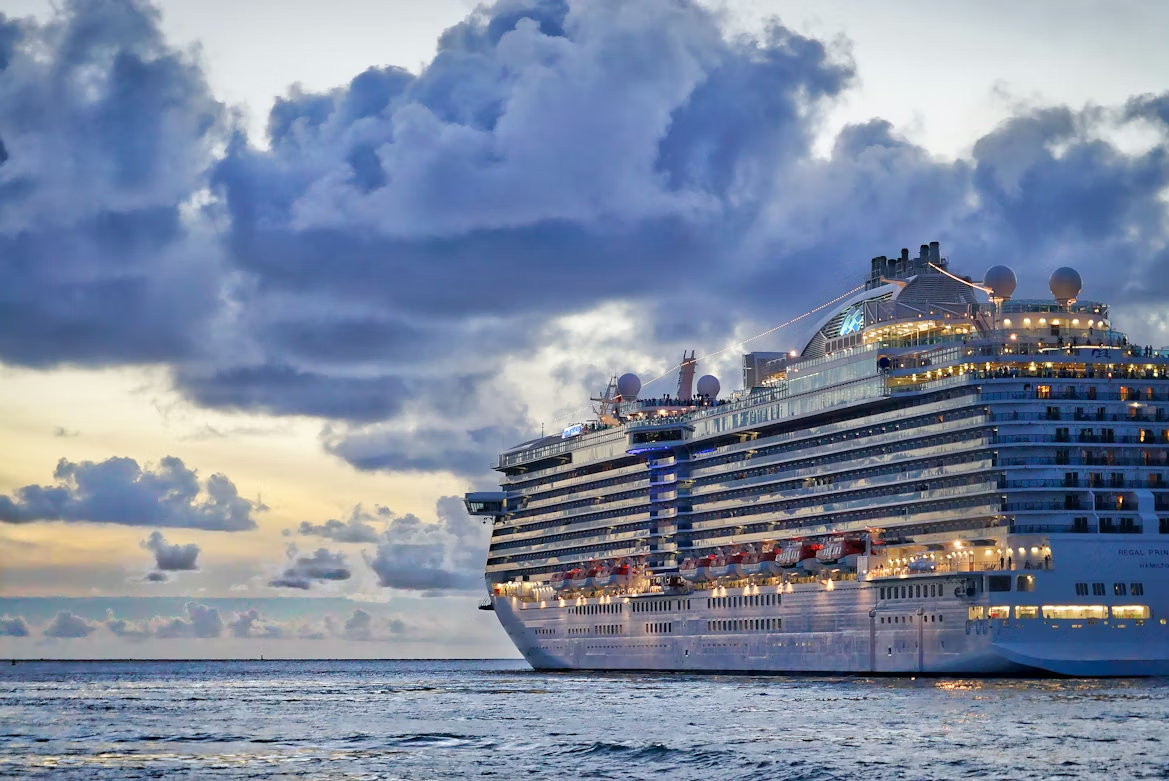
What happens on a cruise can be understood as a simple sequence of moments that repeat on every sailing: embarkation day, onboard life, port days and the final disembarkation. Each stage follows a clear structure designed to move thousands of passengers smoothly through the experience.
Most people search this before their first cruise because they don’t know what to expect.
In simple terms, a cruise is a floating system that combines transportation, accommodation and daily routines into one continuous flow.
A cruise typically unfolds like this:
– Embarkation day (boarding and first hours onboard)
– Onboard life (meals, activities, daily rhythm)
– Port days (shore visits and excursions)
– Sea days (time spent entirely on the ship)
– Disembarkation (leaving the ship at the end)
Understanding this structure helps you know what to expect from the very beginning. If you are preparing for your first cruise, understanding what happens on a cruise from embarkation day to the final day can completely change your experience.
And if you’re reading this, there’s a good chance you’re feeling a little uneasy. That’s normal.
Maybe you’ve already booked a cruise and only now realized you don’t fully understand what you signed up for. Maybe you’ve cruised before and don’t want to miss things this time — especially the small details that tend to slip by. Or maybe you’re simply curious how this whole floating-city thing actually works.
Whichever situation you’re in, this guide exists for one reason only: to explain, calmly and clearly, what happens on a cruise, in order. The cruise experience is built step by step, starting with embarkation day, followed by onboard routines, port days and the final disembarkation process.
TL;DR – What happens on a cruise, in short
- You arrive at the port, hand over large luggage, and go through check-in and security as part of the cruise embarkation process.
- You receive your cruise card, which opens your cabin and works as your onboard payment method (onboard account cruise system).
- Cabins and checked luggage are ready a few hours after boarding.
- The first day is about orientation, the cruise muster drill, and sailaway.
- The following days alternate between days at sea on a cruise and cruise port days.
- Final cruise disembarkation process is organized by time slots and groups, not chaotically.
Read the full step-by-step explanation in our guide about Embarkation Day on a cruise
You’ll find plenty of photos online. Sunsets, pools, endless buffets.
What’s harder to find is a simple explanation of the flow: what happens on a cruise step by step, from the moment you arrive at the port until the moment you walk off the ship a few days later.
That’s what this page is
Table of contents
1) Before you get on the ship
(the part most people underestimate)
Before the sea, before the ship, before the cocktails, there’s a short but important stage where a few things need to be done properly. Nothing complicated — just things that work much better once you understand why they exist.
Cruise ships are small floating worlds with simple rules. The problem is that those rules are rarely explained in one place.
When I went on my first cruise, this stage felt boring. Only later did I truly understand how much it influences the entire day — and the entire journey.

Photo by César León on Unsplash
1.1 Documents and checking in from home
Before embarkation day, make sure you have:
- Your booking confirmation
- The required ID (passport or ID card, depending on the itinerary)
- Online check-in completed, if available
- Contact details (and sometimes minimal medical information)
Online check-in isn’t pointless bureaucracy. In many cases, it assigns you a cruise boarding time window, designed to prevent everyone from arriving at once. Cruises work well when time slots are respected — and poorly when everyone shows up “early, just to be safe.”
Before booking your cruise, pay close attention to where the ship stops and whether your passport allows it. For example, if you’re an EU citizen, a passport is mandatory for itineraries outside the EU, even if the ports themselves are European.
Rules can vary slightly depending on the cruise line and itinerary. That’s why it’s worth being informed before you start throwing clothes into your suitcase.
1.2 Luggage
Luggage naturally falls into two categories:
- Bags you hand over at the terminal (checked luggage cruise terminal)
- Bags you keep with you (carry on bag cruise)
In your carry-on, it’s a good idea to have:
- Documents
- Phone and charger
- Medication
- A change of clothes
- Swimwear
Large suitcases don’t arrive in your cabin immediately. It’s normal to wait a bit — especially on ships boarding several thousand passengers at once. It’s not a tragedy. Depending on the port and passenger volume, when does luggage arrive in the cabin can vary, usually between 2 to 6 hours after boarding.
Think of the ship as a massive hotel that empties and refills in a single day. Logistics take time — but they work.
2) Embarkation day
Embarkation day is paradoxical: it’s the most intense and slightly chaotic day of the cruise, yet also one of the most controlled.
It’s the day when thousands of passengers disembark and thousands more board. Everything moves at a steady, carefully planned pace — even if it doesn’t feel that way from the outside.
A little patience goes a long way. Once boarding is complete, the atmosphere changes completely. Most of the chaos people feel comes from emotions, not from organization — especially while waiting for boarding groups or cabin access. In practice, cruise ships are extremely well run.
Before going deeper into how each part of a cruise works, it helps to understand the most common first cruise mistakes and how they quietly affect the experience.
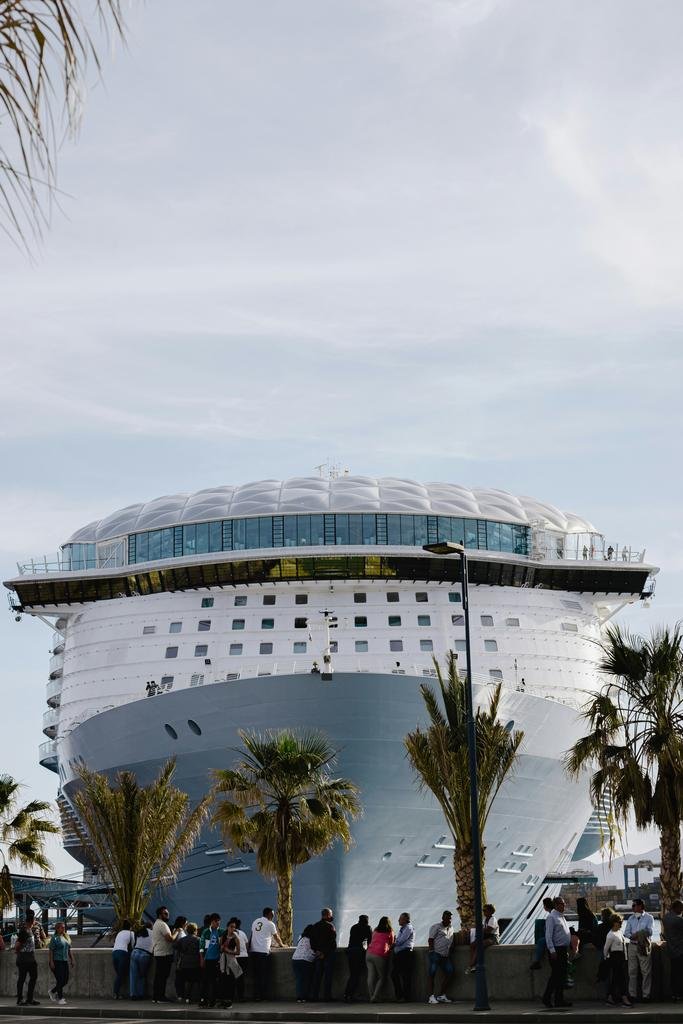
Photo by Yuliya Matuzava on Unsplash
2.1 Arriving at the port
When you arrive at the terminal area, things tend to organize themselves quickly. There are signs, staff members, and luggage drop-off zones.
You’ll immediately notice two types of people: those who look confident and those who look around as if they’ve just entered a very large airport for the first time.
Both reactions are perfectly normal. Nobody is born knowing how cruise terminals work — especially when boarding instructions, luggage tags, and signs all appear at once. Ports are usually well signposted and multilingual. There’s no need to rush, no need to panic — that’s exactly why boarding times exist.
2.2 Check-in
After handing over your large luggage, you go through check-in. This is where your documents are verified and you receive the central object of cruise life: your cruise card.
This card:
- Opens your cabin
- Works as your onboard payment method
- Serves as your onboard identification
Some cruise lines call it a SeaPass card, others simply call it your cruise card. Almost everything revolves around it. And when it comes to lost items, if you ask me, the cruise card has no competition.
2.3 Security check
Security is similar to an airport, but more relaxed. Bags are scanned, rules are followed, and everyone passes through the same process. It’s a necessary step, not an obstacle.
Once you’re through, things begin to feel lighter — partly because the hard part is over, and partly because you’re officially entering cruise territory.
2.4 Boarding
The moment you step onto the ship is quieter than many people expect. There’s usually a greeting, sometimes a photo, maybe a smile and a “welcome aboard.”
And then it happens: you notice the scale.
Photos never quite prepare you for how large cruise ships really are.
People stop. They take photos. Some laugh. Some go silent. Every now and then, someone tears up — not out of drama, but because the experience hits differently than expected. Remember – beyond the visible structure of a cruise, there are also unwritten social patterns that shape the experience, the quiet rules on a cruise.
3) The first hours on board
The first hours are about orientation, not settling in. People wander, explore, get a sense of space. Where to eat. Where to sit. Where to grab a drink. Where the ship seems to stretch endlessly.

3.1 The cabin
Often, cabins aren’t ready immediately after boarding. This is normal. The ship operates like a giant hotel resetting hundreds or thousands of rooms at once.
There’s no reason to rush or worry. Everything will be ready soon — and while it isn’t, you already have access to the ship.
3.2 The first meal
For most people, the first meal happens at the buffet. It’s an unwritten tradition. People drift there instinctively, as if guided by internal radar.
The calmest advice possible: eat, but don’t eat like it’s your last meal. It isn’t. Not even close — especially when dinner, snacks, and late-night options are still ahead.
3.3 Finding your way around the ship
Learning the ship’s layout takes time. Decks, elevators, stairs, corridors. You’ll quickly notice two passenger types: those who master the map on day one, and those who get lost — cheerfully — until the end.
Both survive. Both enjoy the cruise.
4) Muster drill (safety drill)
The cruise muster drill is mandatory and usually takes place on the first day. It’s the exercise through which passengers are informed where to gather and what to do in case of an emergency.
On many modern ships, the drill can be digital (e-muster drill), but participation remains mandatory even in these cases.
You’re shown:
- Where your cruise muster station is
- What to do in an emergency
- How safety procedures work
It’s information you hope you’ll never use — and that’s exactly why it’s worth paying attention.
If you’re curious about how the cruise safety drill actually works and what passengers have to do, read our detailed guide explaining the muster drill on a cruise.

Photo by Gilley Aguilar on Unsplash
5) Sailaway
Departure is the first truly cinematic moment of a cruise. The ship moves slowly. The port drifts away. The city becomes background.
Even people who don’t get emotional easily tend to feel something here. There’s a quiet realization that you’re no longer just visiting — you’re traveling.
Wave if you want. Plenty of others are doing the same.
6) The first evening
By now, you’ve explored a bit, maybe seen your cabin, and started to understand how things work. The ship feels less overwhelming.
Dinner becomes the main event.
6.1 Dinner
For many passengers the first evening onboard ends with their first dinner on the ship, a moment that often carries more expectations than it actually deserves.
Cruise dining usually includes:
- A main dining room
- Included casual options
- Optional specialty restaurants
You don’t need to understand everything on the first night. Nothing disappears if you don’t try it immediately.
6.2 The evening program
There are shows, live music, movies, and events. None are mandatory. A cruise isn’t a checklist — it’s a series of choices.
Pick one or two things. Let the rest go.
7) Days at sea
A typical day at sea on a cruise might look like this:
- Morning: breakfast, coffee, a walk
- Lunch: food, rest
- Afternoon: pool, reading, activities
- Evening: dinner and a show
No one rushes you. No one judges how productive or unproductive your day is.
8) Port days
Cruise port days are about exploration — and balance. For many passengers, they are the moments they look forward to most. Understanding how cruise port days actually work – from leaving the ship to respecting the all-aboard time – helps avoid one of the most common mistakes travelers make.
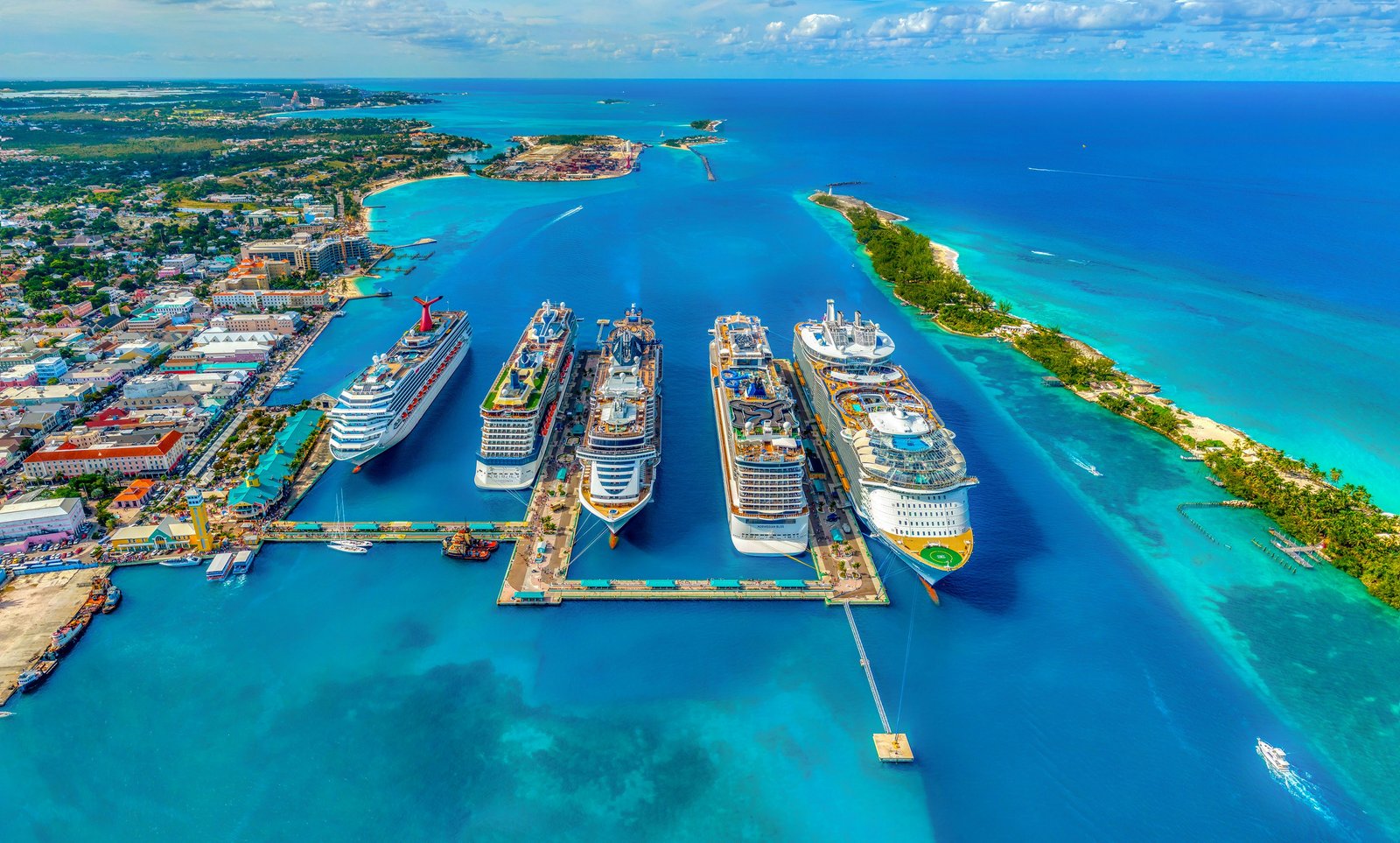
Photo by Fernando Jorge on Unsplash
8.1 Arrival
The ship arrives in the morning, either directly at the dock or anchored offshore. You’ll be informed about schedules and return times. Time matters more on port days than anywhere else.
8.2 Getting off the ship
Disembarkation in port is organized and efficient. Card, ID, route — simple and predictable.
Weather, crowds, and local conditions vary, but the process itself rarely does. Some destinations are tender ports, meaning the ship anchors offshore and passengers reach land using smaller boats.
8.3 What you do in port
You have three clear options:
- Join an organized excursion
- Explore on your own
- Stay on the ship
All are valid. The last option is often underestimated — and surprisingly peaceful.
8.4 Return time
“All aboard time cruise” rules are fixed. The ship does not negotiate with watches, sunsets, or unfinished shopping. Missing it usually means arranging your own transport to the next port. The ship may wait only in extremely rare cases — usually when a delay involves a ship-organized excursion.
9) Life on board: payments and expenses
Onboard purchases are usually cashless onboard expenses. Everything is charged to the account linked to your cruise card and settled at the end.
If something isn’t included in your package, it will appear on that account — minibar drinks included. This isn’t unique to cruises; it’s standard hotel logic applied at sea.
10) The final days
The last days are still part of the journey. Nothing needs to slow down just because the end is approaching.
10.1 The last evening
You’ll receive clear instructions for disembarkation. The ship runs on precision — and that precision works in your favor.
10.2 Luggage for disembarkation
You usually choose between:
- Self-assist disembarkation
- Standard luggage service
Pick what fits your schedule best.
10.3 Disembarkation
The cruise disembarkation process is efficient, not poetic. And that’s exactly how it should be. By this point, friendships have formed, stories have been written, and memories created. Most passengers leave the ship according to pre-assigned groups and time slots.
Photo by Stanley Sim on Unsplash
11) Frequently asked questions
When do bags arrive in the cabin?
Usually within a few hours. Sometimes in the evening.
What if my cabin isn’t ready yet?
That’s normal. Explore the ship — you already have access.
What happens if I miss the ship in port?
The ship will not wait. Travel insurance and awareness of time matter.
Do ships ever wait for passengers?
Only in rare, exceptional cases involving ship-organized excursions.
What if I lose my cruise card?
Visit guest services. It’s easily replaced.
Do I have to attend all activities?
No. Choose what feels right.
Is it normal to feel lost on the first day?
Completely normal. Almost universal.
12) Final thoughts
If you’re new to cruising and want a broader overview before diving deeper, explore our Cruise Basics Guide
Cruising isn’t complicated. It’s just large — and large things become manageable once you understand their order, especially when everything follows the same sequence every time.
What we tried to do in this guide was to put everything in line. This guide is based on direct onboard experience and on standard procedures used by major cruise lines. We’re not speaking from hearsay. We’re not writing second-hand.
If you now have a clear picture of what happens, step by step, then this guide has done its job