Why your cabin isn’t ready when you board (and what to expect instead)
If you are wondering why cruise cabins are not ready when you board, you are not alone. This is one of the most common questions people have on embarkation day, especially during the cruise boarding process. Thousands of passengers arrive at the same time, while thousands are leaving, which is why cabins cannot be ready immediately. Understanding what happens on embarkation day helps you know what to expect and makes the first hours onboard much easier.
Why are cruise cabins not ready when you board?
Cruise cabins are not ready at boarding because ships operate on a full turnover system, where thousands of passengers leave and arrive on the same day. Cleaning, inspections and logistics take several hours, which is why cabin access is usually delayed until the afternoon.
For many people on their first cruise, this is the first real moment of confusion. Ok, so, you have boarded the ship, you are officially onboard, you are holding your cruise card in your hand. And yet, when you try to go to your cabin, you are told it is not ready.
This moment is actually part of the normal cruise boarding process, even if it feels unexpected. Many first-time cruisers experience the same confusion on embarkation day, simply because expectations are different from how cruise ships actually operate.
But wouldn’t it be better to have a glass of Sauvignon Blanc, as our colleague Alex would say? Or a cold beer — as our colleague Val would say, but would never admit.
If you want to understand what happens on embarkation day step by step, you can read the full guide:
👉 What happens on a cruise
It feels contradictory, almost unfair, but here we are, such things happen: if you are on the ship, why can’t you go to your room? The short answer: because a cruise ship does not work like a normal hotel. The longer answer is worth understanding — because it explains a lot about how cruises actually function and how the cruise boarding process really works.
The difference between expectation and reality
Most people arrive with a simple mental model:
boarding time = room access
This model works in hotels, it does not work at sea. A cruise ship does not check guests out gradually throughout the day.
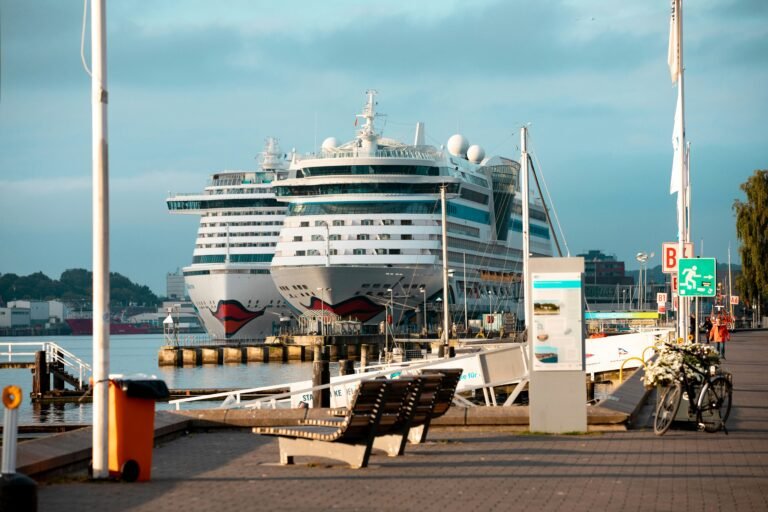
It empties completely in the morning, and then it fills completely again. Thousands of people leave, and yes, you guessed it, thousands of people arrive. On the same day. And your cabin exists in the middle of this reset, part of what is known as the cruise ship turnaround day.
What happens before you board
Before new passengers step onto the ship, an entire logistical ballet is already underway even if you don’t notice it. Previous guests disembark early in the morning, cleaning teams enter cabins immediately, linen is replaced, bathrooms are reset, surfaces are disinfected and inspections upon inspections take place.
This is repeated hundreds — sometimes thousands — of times, in parallel. Cabins are not cleaned one by one, they are cleaned in waves. This is exactly how cruise ships clean cabins efficiently in such a short time.
Some are ready earlier, others later. For example — while I am writing this material, this is exactly what I am doing. I am enjoying a cappuccino (some of us really don’t drink while we are working — a note for some colleagues) and I am waiting for my cabin to be ready. I will need a second cappuccino, I am fully aware.
One of the unspoken truths is that the ship does not wait for the last cabin to be perfect before boarding begins. And it shouldn’t do that.
Why boarding starts before cabins are ready
Early boarding serves several critical purposes. First of all, it distributes the crowds because if everyone boarded only when cabins are ready, terminals would become crowded and ships would instantly become overcrowded.
Secondly, it keeps the operation moving. Cruise ships operate on tight schedules, delays accumulate quickly when thousands of passengers are involved.
And we reach the third point, one that gives passengers time to orient themselves. The ship is not just big, it is huge. The first hours are designed for exploration, not unpacking. In other words, boarding before cabin access is not a company oversight, it is a choice, a way to make you understand things and adapt to the cruise check-in process.
This is why cruise embarkation tips often recommend using this time to explore the ship instead of waiting for your cabin. The first hours onboard are designed to help you understand how everything works.
What you should do instead
Those first hours are not empty time, they are transition time. This is when most people:
- eat their first meal (by the way – if you want to be prepared for your first dinner I wrote a guide on what to expect)
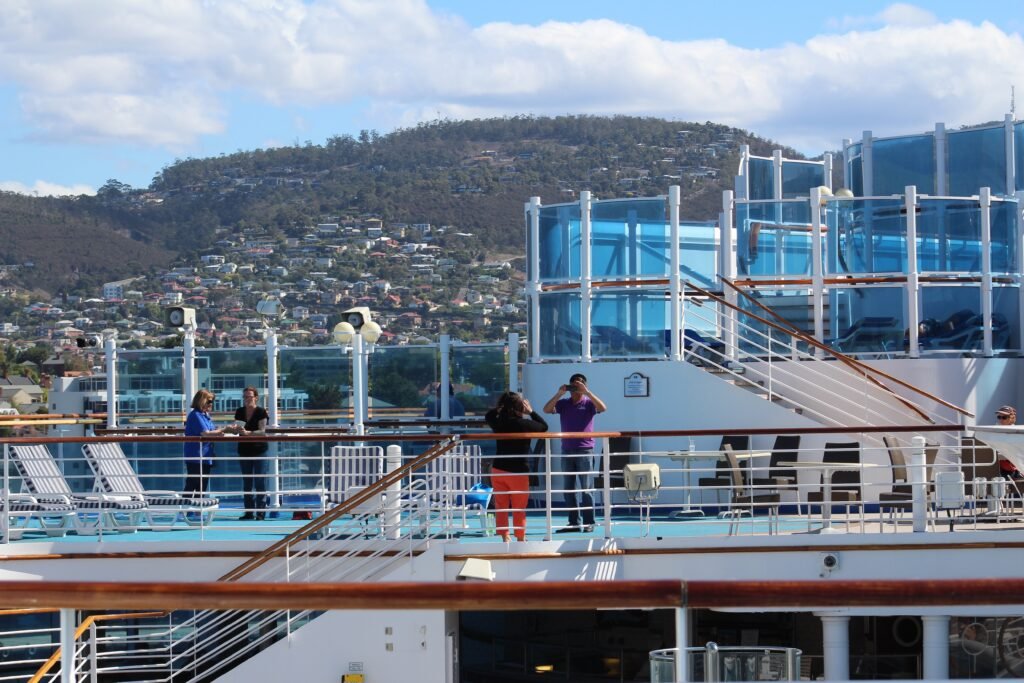
- walk the open decks
- get a sense of the ship’s layout
- sit down for the first time and exhale
Food venues are open, lounges are available, outdoor spaces are accessible. Yes, you are already on vacation — just not in your room yet. These are some of the most useful cruise embarkation tips, especially for first-time cruisers who are not familiar with what happens on embarkation day.
Why it feels harder than it is
The discomfort comes from uncertainty, not inconvenience. People worry because:
- they don’t know how long the wait will be
- they don’t know where their luggage is
- they feel “in between states”
But cruise ships are built exactly around this window. Try to enjoy this time, nothing unusual is happening. If cabins were frequently delayed for hours beyond expectations, cruising wouldn’t work. But it does.
When cabins usually become available
Although exact timing varies, cabins usually open:
- in the afternoon
- after most luggage is onboard
- after inspections are completed
Announcements are made, signs appear, elevators suddenly stop blocking certain decks. It happens quickly — and almost always at the same point on every cruise. This is the typical cruise cabin ready time and part of the standard cruise boarding process.
What happens to your luggage
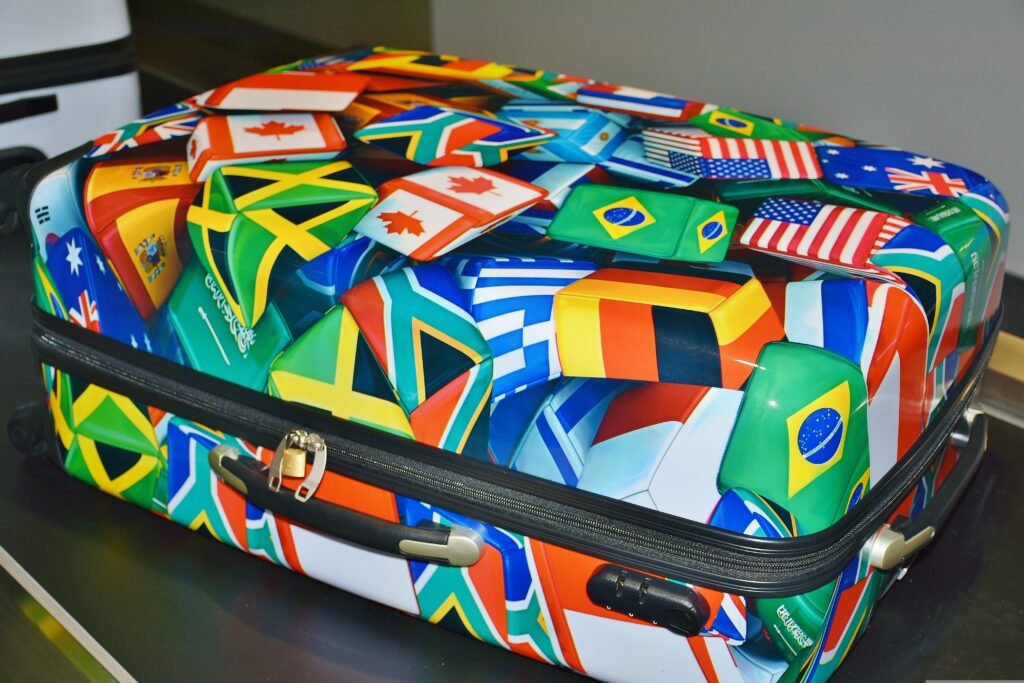
Luggage follows a separate path. After you hand over your large suitcases at the terminal, they are:
- scanned
- sorted
- loaded
- distributed by decks
This process takes time, there is no point in telling you otherwise. That is why it is recommended to keep essentials in a small bag. Not because luggage is unsafe — but because logistics have their own rhythm.
Most luggage arrives by late afternoon or early evening. Some earlier, but there are also more particular cases when they arrive even later. And this is normal, considering the cruise luggage delivery time.
Why rushing to your cabin doesn’t help
Some passengers wait impatiently outside cabin corridors, hoping to be the first inside. I have seen this in almost every cruise I have boarded. It changes nothing if you stay nearby, somehow, on standby.
Cabin access is announced when it is ready, until then, crews are still working. Standing nearby only adds pressure to people doing physically demanding work, at speed.
The ship does not reward urgency here, but it rewards patience.
The psychological shift that happens when you enter the cabin
The moment you enter the cabin, something changes. You put your things down, you close a door, maybe you sit down and the ship suddenly feels smaller. More manageable, more personal, especially since you already have a clear idea — you have learned a few things, maybe even a few shortcuts.
That is why cabin access feels so important — not because of the room itself, but because it marks the end of the transition. Understanding this helps you wait without frustration.
Why experienced cruisers don’t stress about this
People who have cruised before barely notice this phase. They even expect it and prepare for it. They eat, explore, watch the ship come to life — and then, without drama, their cabin is ready. Experience replaces urgency with trust. I have also prepared for you a material about the first mistakes you can make on a cruise and how to avoid them.
What happens if something is actually wrong
Rarely, there are situations:
- a cabin needs additional maintenance
- inspections take longer than expected
When this happens, the ship communicates clearly, alternative arrangements are made. No one is left without options. Silence usually means everything is proceeding normally.
A small habit that helps
The best thing you can do on embarkation day is simple: assume waiting is part of the process. When you stop checking the clock, the wait becomes background noise.

Frequently asked questions about cruise cabins
What happens on embarkation day before cabins are ready?
Passengers board the ship, explore public areas, eat, and wait until cabins are cleaned and inspected.
Can you access your cabin immediately after cruise boarding?
No. Cabin access is usually delayed until the afternoon due to cleaning and logistics.
Is it unusual for cabins not to be ready at boarding?
No. It is standard.
Can I request early access?
Generally no. Access is system-wide, not individual.
What if I need medication from my luggage?
Keep essentials in a small bag.
Does this mean the ship is disorganized?
Quite the opposite. This system exists because it works.
TL;DR – why cruise cabins are not ready
Cruise cabins are not ready at boarding because ships operate on tight turnaround schedules. Cleaning, logistics and inspections take time, which is why cabin access is usually delayed until the afternoon.
Your cabin will be there
Your cabin will be there and when it opens, it will be exactly what it needs to be.