Cruise embarkation day – hour by hour
Embarkation day is the most important moment of a cruise, when thousands of passengers board the ship and the entire experience begins. Understanding the cruise boarding process helps you avoid confusion and enjoy your first hours onboard.
Embarkation day is, in fact, your first beautiful memory of the trip — that’s all it needs to be. And that is how it will be after you read this material that we have prepared for you. So forget about stress, chaos, or exhaustion — they don’t belong here.
If you’ve ever wondered what happens on cruise embarkation day, how long cruise embarkation takes, or what to expect during the cruise boarding process, this guide walks you through it clearly and calmly.
The entire cruise embarkation day schedule lasts, on average, between 1.5 and 3 hours and includes handing over luggage, document verification, security screening and boarding in organized groups. Do not forget that all cabins become available later, and the safety drill takes place before the ship’s departure.
For a broader understanding of how embarkation fits into the entire voyage, you can also read our complete guide on what actually happens on a cruise – explained step by step, where we connect this first day to everything that follows at sea.
Does it sound frightening? In reality, embarkation day does not have to come together with frustrations, moments of boredom or long waits. You’ll see that once you understand the flow, everything feels far more manageable. A lot happens in a relatively short period of time, and most of it is unusual. Once you understand the order of things, the pressure fades quickly — largely because it starts to make sense.
This guide goes through embarkation day hour by hour, not to over-organize it, but to show you that nothing truly happens at random.
Why embarkation day feels different
Embarkation day is a transition. You are not yet fully on vacation, but you are no longer in your usual routine. You move from land logic to ship logic, from individual rhythm to shared rhythm. And we say this because, together with you, thousands of people are doing the same thing simultaneously.
The ship empties, refills, resets — all in a single day.
Once you accept that this day has its own rules, it becomes much easier to go through. And to understand everything. This is also where many first cruise mistakes begin, especially for passengers trying to understand everything too quickly.
On my first cruise, I remember noticing how quickly the atmosphere shifts — from structured terminal logistics to something much calmer the moment you step onboard. It happens gradually, almost without you realizing it.
The first hours on board can feel confusing and overwhelming, which is completely normal. If you’re wondering why everything suddenly becomes easier after a day or two, here’s a detailed explanation.
08:00–10:30 — Arrival at the cruise port
Most people arrive earlier than necessary. Some do it out of excitement. Others out of fear of missing something important.
Choosing the best time to arrive at the cruise port can significantly reduce waiting time at the cruise terminal and help you avoid long lines on embarkation day. Many cruise embarkation tips focus on what happens in the first hours onboard, including cabin access, luggage delivery and how to explore the ship efficiently.
Cruise terminals are built to process large volumes of passengers. When you arrive, you will usually encounter:
- Clear signs with the ship’s name
- Staff directing passenger flow
- Designated areas for luggage drop-off
This is usually the first moment when the cruise begins to feel real. Not because you are already on board — you are not — but because everyone around you is starting the same temporary journey.
If you have completed the cruise check-in online process and arrived within the allocated time slot, you are exactly where you need to be. You do not need to do anything extra, there is no reason to show up whole hours earlier, and no one on the ship will make room for you. Just respect the online check-in.
Arriving within your assigned time window is one of the simplest ways to make embarkation smooth and avoid unnecessary waiting at the cruise terminal.
10:30–11:30 — Cruise luggage drop-off and terminal flow
Large suitcases are handed over first. Understanding cruise luggage drop-off rules helps you avoid common embarkation day mistakes, especially placing essential documents in checked luggage.
These bags are tagged, sorted and sent on a separate logistical route to the ship.
From this moment on, everything essential should be with you.
Inside the terminal, movement is deliberate. Lines advance slowly, but steadily. People check their phones, adjust their bags, exchange short comments with strangers. Anticipation grows quietly.
This waiting period often seems longer than it actually is — largely because it is the last pause before boarding.
It may feel slow, but the embarkation process is carefully timed behind the scenes to keep thousands of passengers moving in sequence. This is also the moment when most passengers begin to understand the unspoken flow onboard: cruise etiquette: the quiet rules nobody tells you about
11:30–12:30 — Cruise check-in procedure
The check-in itself is rarely complicated.
Completing the cruise check-in online process before arrival is one of the easiest ways to speed up cruise boarding and make embarkation smoother.
Documents are verified, details are confirmed. And then you receive the object that will discreetly control a large part of your experience in the following days: the cruise card.
Your cruise card:
- Opens the cabin
- Handles onboard payments
- Serves as onboard identification
It is small, ordinary and extremely important. It’s inconvenient, not dramatic. Guest services replace cards routinely and efficiently.
Once check-in is complete, something subtle changes. You’re officially onboard.
From this moment on, you are no longer preparing for the cruise — you are part of it. Remember – the first day on a cruise can feel overwhelming not just because of the size of the ship, but also because your sense of time is still tied to structure and expectations. Interestingly, this changes very quickly, and by the second day, many passengers notice that time itself starts to feel different
What surprises most people
We now make a short parenthesis just because we are trying to bring you up to date with absolutely everything. Go carefully through the following list — you will agree with us later:
- how much walking there is on the first day
- how easily you can get disoriented
- how quickly lines form at the elevators
- how quiet the departure moment is
On my first sailing, I genuinely underestimated the distance between decks. What seemed close on the ship map felt very different when walking it in real time.
12:30–13:30 — Cruise security screening process
Security works much like airport security, but without urgency. Bags are scanned, rules are applied uniformly. The atmosphere, however, is visibly calmer.
There are no last boarding calls, no one runs desperately, and there is no countdown.
Once you pass security, the tension tends to decrease because the formalities are behind you.
The cruise security screening process is designed to be thorough but not stressful — efficiency matters, but so does atmosphere.
13:00–14:30 — Boarding the ship
Boarding usually takes place in groups, not all at once. Cruise boarding groups are called in stages to keep the embarkation process organized and efficient.
When you finally step onto the ship, the moment is quieter than people expect. There may be a greeting, a smile, sometimes a photograph.
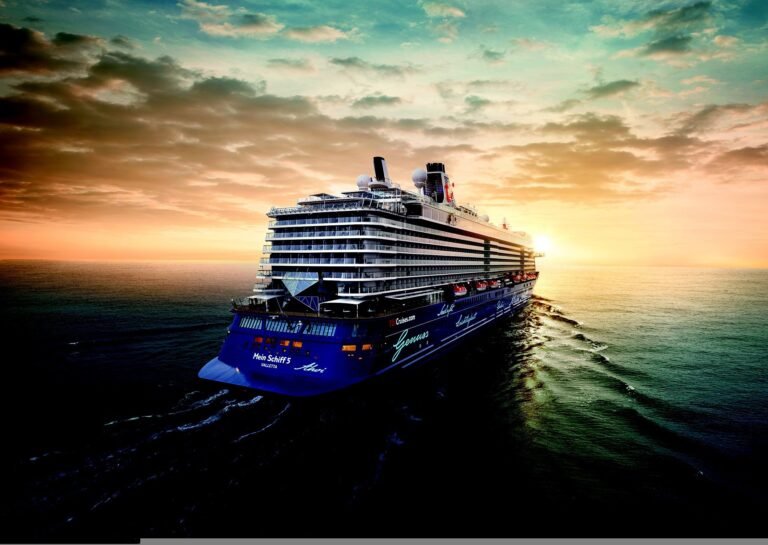
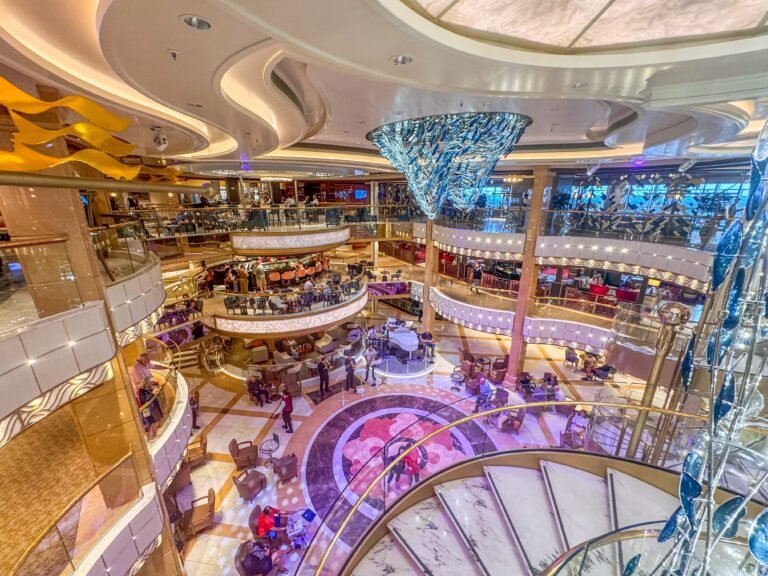
And then you notice how big it actually is.
Photos and videos rarely prepare you for how large cruise ships actually are. Most people pause at this point — some for another set of pictures, others simply to understand the space around them.
You’re officially onboard.
For a brief second, everything feels suspended — not dramatic, just different.
14:30–16:00 — First exploration and lunch
Cabins are often not yet ready. This is normal. The ship is still resetting hundreds or thousands of rooms after the previous voyage. Cleaning and logistics teams continue to work while passengers begin to explore.
This interval is intentionally designed for walks and cruise ship orientation. You will laugh, but most people head first toward food. Buffets open early and become natural gathering points. It is not always hunger — it is orientation.
This is also the ideal moment to:
- Walk the main decks
- Identify elevators and stairs
- Understand the structure of the ship
You are not expected to understand everything yet. You will not.
Elevators tend to be the most crowded in the first hour, and some quickly discover that stairs are often faster.
If you are curious about cabin categories or upgrade strategies, we explore those details separately in our cruise cabin guide.
16:00–17:00 — Cabins open and luggage arrives
At some point in the afternoon, cabins become available. Announcements are made. Signs appear.
And suddenly, you are no longer just a passenger moving through a massive structure. You have a room. A door that closes, a place only yours where you can put your things.
Luggage may already be there. If not, it will arrive later. This is normal and rarely a problem, so do not worry about this either.
From this point on, the pace begins to slow — even if you do not consciously notice it.
For some, the first thing done is to check the balcony. For others, to test the air conditioning or the water pressure in the shower. It does not even matter, the idea is that everyone enjoys the chosen room.
On my first cruise, stepping onto the balcony was the exact moment the day stopped feeling procedural and started feeling personal.
17:00–18:00 — Safety drill (Muster Drill)
Before departure, the mandatory muster drill takes place.
The muster drill explained simply: it is a required safety briefing on every cruise ship before departure.
It is short. Organized. Calm.
You are shown:
- Where your assembly point is
- What to do in case of emergency
- How safety information is communicated
It’s simply about familiarity. Once completed, the drill is finished for the duration of the cruise. If you want to understand exactly how the process works and what actually happens during the safety drill, you can read our full guide explaining the muster drill on a cruise.
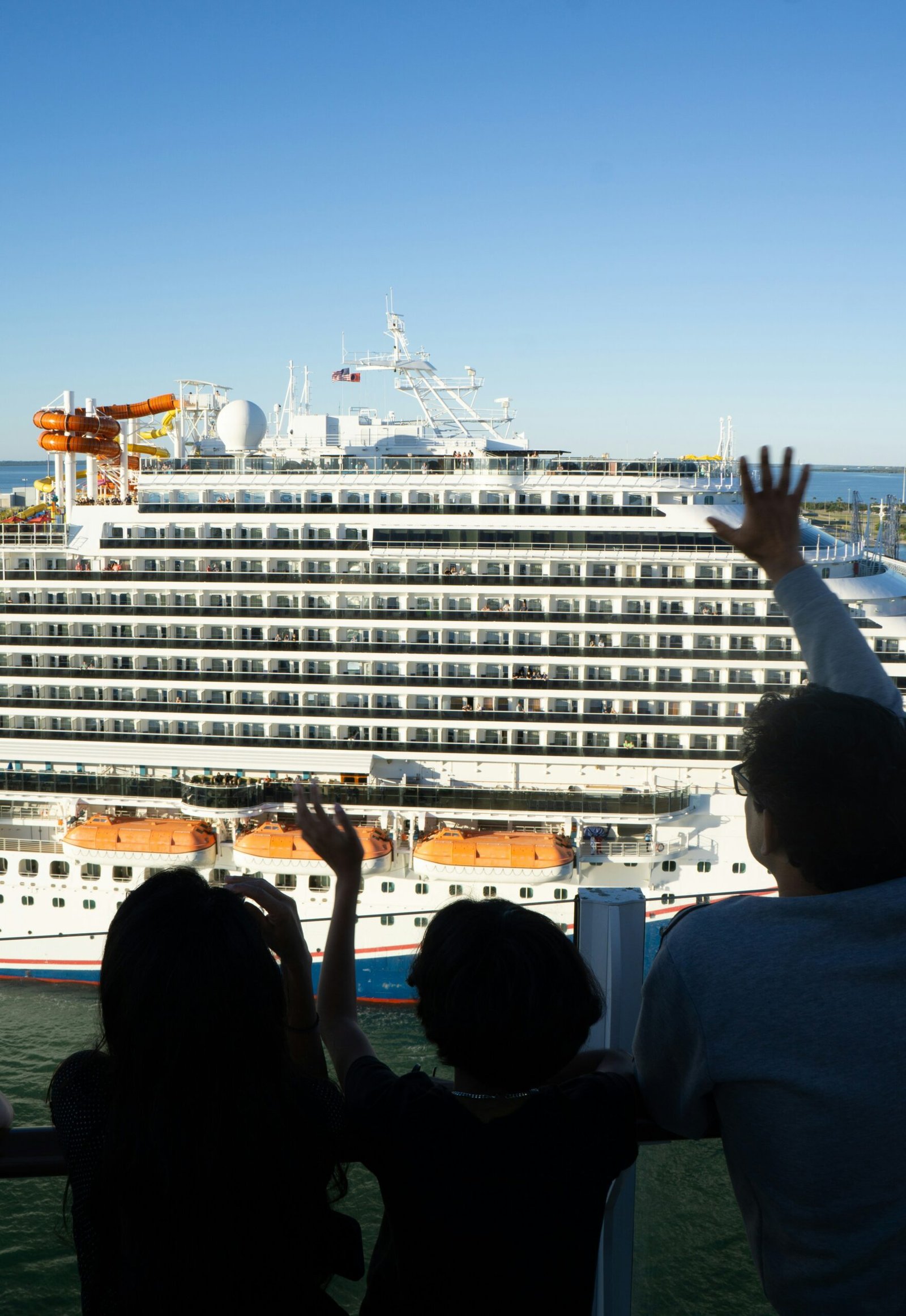
18:00–19:00 — Departure from the port (Sailaway)
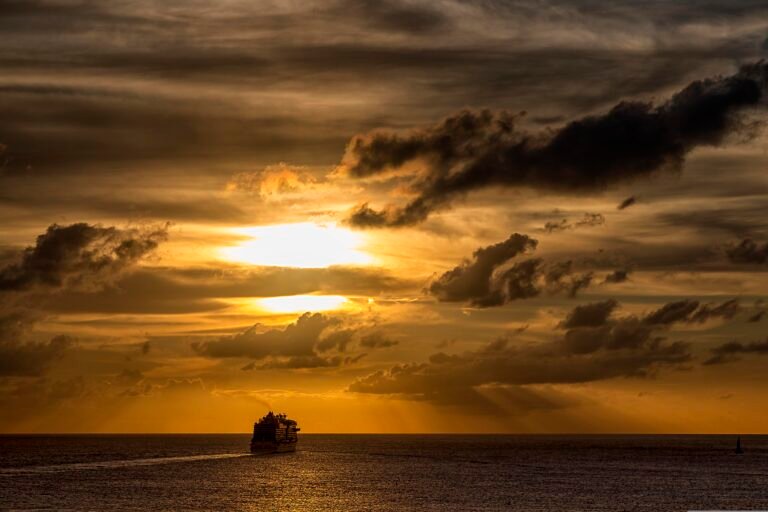
The ship begins to move slowly. Almost in silence.
And this is truly a beautiful moment of the cruise, which people live differently. We have seen people holding plastic cups from the buffet. Others look for a good angle for a photograph. Someone does FaceTime with family on shore. Children run between sun loungers. The port begins to move away without noise.
For many passengers, this is when the cruise truly begins — simply because the preparation is over.
At some point, without noticing when exactly, you stop thinking about logistics and start watching the horizon instead.
19:00–22:00 — The first evening
Dinner follows. Shows begin, bars gradually fill. After the long embarkation day, the first dinner on the ship often becomes the moment when passengers finally relax.
The first evening is not about maximizing experiences. It is about recognizing that you do not have to do everything immediately.
When you return to the cabin, embarkation day already feels distant — full, but complete.
Once embarkation day is over and the first evening onboard settles in, many passengers begin looking ahead to the first destination on the itinerary. Understanding how cruise port days work – especially the importance of the “all aboard” time – helps avoid unnecessary stress when the ship arrives in port.
What can go wrong on embarkation day
Even if the process is well organized, there are situations that can complicate things:
- Passport or documents mistakenly placed in checked luggage
- Arriving too late because of a delayed flight
- Not completing online check-in
- Not keeping documents accessible
- Not having the ship’s official app
At least one of these situations could delay your vacation plans. From experience, being prepared makes all the difference.
Most embarkation day problems are preventable with simple preparation and awareness.
Frequently asked questions about cruise embarkation day
How long does cruise embarkation actually take?
Usually between 1.5 and 3 hours, depending on timing and passenger volume.
What happens on cruise embarkation day?
Passengers check in, drop off luggage, pass through security screening, board in groups, and attend the muster drill before sailaway.
Why are cabins not ready during embarkation?
Cabins are cleaned in parallel with boarding to maintain passenger flow.
Can the ship wait for late passengers?
Only in rare cases involving ship-organized excursions.
Our final thought
If I think about the first embarkation I experienced on a cruise, I remember the smiles of the people around me.
Because in the end, we are talking about a vacation. And once you understand the structure behind cruise embarkation day, it starts to feel effortless.
Land slowly gives way to sea — and routine quietly fades into the background.