First cruise mistakes – the quiet ones nobody warns you about
First cruise mistakes are often small, quiet decisions that affect the experience without being obvious. Most people don’t notice them when they happen — only later, when the cruise is already halfway through.
These are not dramatic problems like missing the ship or losing documents. They are subtle misunderstandings, expectations and habits that slowly shape how the entire experience feels.
If you want to understand how the entire cruise experience unfolds step by step, you can start with this complete guide: what happens on a cruise
What are first cruise mistakes? Quick overview of the most common cruise mistakes
These are the most common cruise mistakes first-time passengers experience, often without realizing them at the moment
The most common first cruise mistakes are:
• Trying to understand everything on day one
• Treating the cruise like a checklist
• Overvaluing the perfect day
• Ignoring fatigue
• Assuming you will fix everything later
• Comparing your experience to others
• Saving enjoyment for later
• Underestimating how fast time passes
In short: the most common cruise mistakes are not dramatic — they are small decisions like overplanning, rushing or comparing your experience to others.
First cruise mistakes are often small, quiet decisions that affect the experience without being obvious. These are some of the most common first cruise mistakes — the kind of cruise mistakes for beginners that are easy to overlook but shape the entire experience.
It’s time to also talk about the first mistakes you make on a cruise. And I promise not to turn this material into a story full of memories, although the temptation is big. I have lived enough over time, I have actually experienced even more and, definitely, I have seen quite a lot. Most mistakes on a cruise are not dramatic.
They don’t involve missed ships, lost passports or arguments at guest services. Those stories are loud and circulate easily, whether we are talking about jokes, stories on social media or word of mouth.
The real mistakes are quieter, they happen slowly and they feel reasonable at the time. And most people realize them only when the cruise is already halfway over.
These mistakes first time cruisers make are rarely dramatic, but they are among the most common cruise mistakes people remember only after the trip is over.
Mistake #1: Trying to understand everything on day one
The first day overwhelms almost everyone, this is the truth, no matter how I try to tell it to you. There is information everywhere, screens, announcements, leaflets, apps. People feel the need to “get it” — to understand how everything works immediately.
Well, exactly this need creates tension. Cruises are not designed to be understood all at once, let me remind you that they are designed to reveal themselves gradually.
This is one of the most common embarkation day mistakes that many beginners experience.
When you force understanding too early, you turn curiosity into pressure. Where are you running, where are you rushing, what do you want to do from the very first hours? Yes, indeed, the temptation is big — I remember that on my first cruise I almost didn’t take the camera off my eye, it was like an extension. I wanted to take pictures of absolutely everything, every single thing impressed me, I felt like I wanted to take everything with me on that film. Yes, my son, you can laugh as much as you want, there is no point in holding back, that’s how we used to take pictures back in the day. There was a camera, a film, you had limited positions.
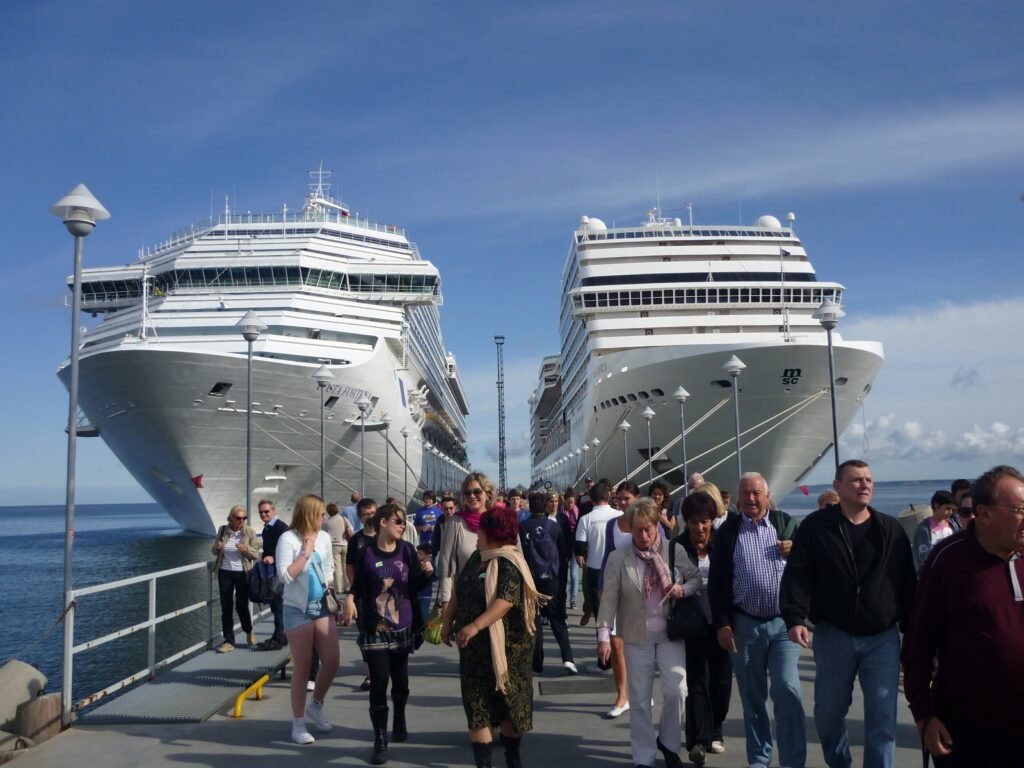
Mistake #2: Treating the cruise like a checklist
Many first-time cruisers come with a mental list. Restaurants to try, shows to see, activities to attend. And all of them are mandatory, all must be done from the very first day.
Lists feel productive, but you should know, they also create anxiety. Cruises do not reward completion, they reward presence. When you rush from one thing to another, many times you miss the part that actually stays with you.
This is one of those cruise planning mistakes that turns a relaxed experience into a checklist.
And the best example for me remains the family from Bulgaria that I met on a cruise in the Bahamas. Husband, wife and two children who in the first days ran from one objective to another, they almost didn’t miss anything. It would have been a beautiful memory for them if they weren’t sleeping when we arrived in the Bahamas.
Mistake #3: Overvaluing the “perfect day”
People often decide in advance which day should be the best. Maybe it’s about the first port. It could be a specific excursion, a formal night. Exactly this expectation quietly raises the stakes.
When the day turns out to be simply good, not extraordinary, disappointment appears — even though nothing went wrong, the cruise did not fail. The expectation failed.
Many of these plans depend on how smoothly everything works onboard, and that usually revolves around your cruise card, which controls access, payments and movement on the ship: cruise card explained
Mistake #4: Ignoring small fatigue signals
Cruise fatigue is subtle, but it appears. It doesn’t announce itself loudly, it appears as impatience, as a slight irritability. As the feeling that something “is not right” without a clear reason.
Most people ignore it because they don’t want to waste time resting. Ironically, that is when rest becomes the most necessary.
And the Bulgarian family I wrote to you about above was not the first one I met along the way that missed wonderful objectives. Yes, it’s nice to sit at night with a beer and stories, it’s very good that you don’t miss meals, activities, but it is very tiring to try to do absolutely everything, especially when the schedule is designed for a few hundred tourists.
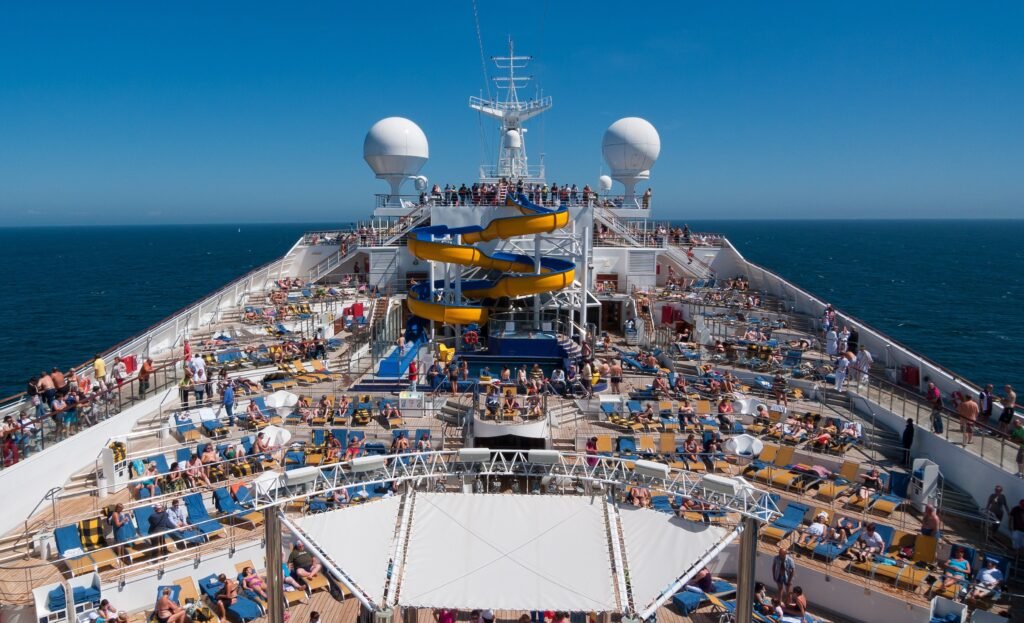
Mistake #5: Assuming you will “fix it tomorrow”
This is one of the quietest mistakes of all. People notice something they enjoy — a place, a routine, a moment — and think they will come back to it later. Yes, on land tomorrow seems guaranteed, but sometimes, at sea, it is not.
This is a classic example of how small cruise mistakes can accumulate without being noticed.
Weather changes, schedules shift and energy drops. This becomes even more visible during port days, when plans depend on timing, weather and energy. If you want to understand how port days actually work and why people sometimes miss experiences, this explains it clearly: cruise port days
Mistake #6: Comparing your experience to others
Oh! Here I think I could write an entire novel. Cruise ships make comparison easy. You see what others are doing, where they are going, how busy they seem, how relaxed they look. And comparison sneaks in without invitation.
Quietly it replaces your own rhythm with someone else’s, and once that happens, enjoyment becomes conditional. Not to mention the memories of the godfather that you must also tick, the photo of the cousin, the stories of the colleague from work or from university. All of these, I repeat, are their memories, you need to discover yours.
Mistake #7: Saving enjoyment for “later in the cruise”
Many people treat the first days as a warm-up. They think they will relax once they “settle in” and postpone enjoyment until things feel familiar.
The problem is that familiarity comes gradually — and often later than you expect. When you delay your enjoyment, you miss the raw freshness of the beginning, you may miss the funniest moments.
Mistake #8: Underestimating how fast time passes
Time on a cruise is deceptive. Days feel long while they are happening, after which, as if by a signal, they become short after they are gone. People are often surprised by how quickly the final days arrive — not because the cruise was short, but because attention was divided.
Many first time cruise tips focus on planning, but very few mention how quickly time actually passes onboard.
Time passes the fastest when you keep waiting for a better moment. So, my advice, after almost 80 cruises behind me, would be to enjoy the moment, the instant, everything that each happening offers you, to let yourself be carried by the wave, but also to respect your personal schedule. If at home you sleep 10 hours per night, how do you imagine that on a cruise you will be able to skip sleep?
Why these mistakes are easy to make
None of these mistakes come from carelessness, they appear from good intentions:
- the desire to make the most of the trip
- the desire to do things right
- the desire for the experience to be worth it
Ironically, this effort is what creates friction, but cruises work best when effort decreases.

A different way to think about “getting it right”
There is no optimal cruise, there is only your cruise. Some days will be quiet, some meals will not bring anything spectacular or instagrammable. Some unexpected moments will be perfect, others will simply pass. The mistake is to try to predict them.
In some destinations, things can become even less predictable in tender ports, where ships cannot dock directly and everything takes more time than expected: what is a tender port on a cruise
What experienced cruisers learn (without realizing it)
People who cruise often stop optimizing. They have their own rhythm and rely heavily on a few clear things:
- they skip things without guilt
- they repeat things without boredom
- they listen to their energy instead of schedules
They don’t avoid mistakes, they just make fewer of the quiet ones.
Common questions about cruise mistakes
What are the most common cruise mistakes?
The most common cruise mistakes are overplanning, trying to do everything and not adapting to the slower rhythm of cruise travel.
Are cruise mistakes serious?
Most cruise mistakes are not serious, but they can affect how enjoyable the experience feels.
How can you avoid cruise mistakes?
By slowing down, planning less and focusing on the experience instead of trying to optimize everything.
Instead of a conclusion
The most common mistakes on a cruise do not ruin it, they only slightly blur its charm. When you notice them, gently, without judgment, the cruise becomes clear again. You start paying attention not to what you should be doing — but to what you are actually living.
Learning how to avoid cruise mistakes is not about doing everything perfectly, but about understanding how cruise travel actually works.
In simple terms, cruise mistakes happen when expectations don’t match how cruise life actually works.
And usually, that is enough