How to choose shore excursions on a cruise. What people actually do instead
Choosing shore excursions on a cruise is not just about price or destination. Most people think they compare options carefully, but in reality, decisions are driven by simple psychological factors like fear, energy and mood.
How to choose shore excursions on a cruise (quick answer)
The best way to choose shore excursions on a cruise is to consider:
- how safe the option feels
- how much energy you have that day
- whether you prefer structure or freedom
Most people don’t choose based on price or reviews alone, but on how the excursion fits their mood and expectations.
If you want to understand how to choose the right shore excursion on a cruise, it helps to look at how people actually decide — not how they think they do.
People rarely choose shore excursions correctly. And I will explain to you immediately what this is about, especially since there are a few colleagues in the newsroom who can’t wait to hear more about my eventual glass of Sauvignon Blanc.
Most people search how to choose shore excursions on a cruise before their first trip, because they want to avoid making the wrong decision.
Most people don’t realize this before their first cruise, and that’s exactly why choosing shore excursions can feel more stressful than it should.
Usually, tourists do not compare options calmly, they do not analyze value in detail. And they almost never follow a rational process from start to finish. Instead, what they do is much simpler — and much more human.
The illusion of choice
Cruise excursions are usually presented in the form of a list that contains times, prices, a lot of descriptions, even more photos and levels of activity. On paper, this looks like an invitation to choose carefully.
In practice, most people skim, hesitate briefly and then anchor on a small detail that feels right — or wrong — and decide from there. The choice happens quickly, goes through the wallet, then the justification comes later.
It happens quickly.
The first filter is fear
The first filter is fear, I repeat, the first filter is almost always fear. Fear of missing the ship, fear of getting lost, fear of doing something “wrong”. And why not, the fear of trying things that will, at some point, take you out of your comfort zone.
That is why ship-organized excursions feel safer, especially on the first cruise. They remove responsibility, so if something goes wrong, it is no longer personal. For many people, safety beats curiosity — at least in the beginning.
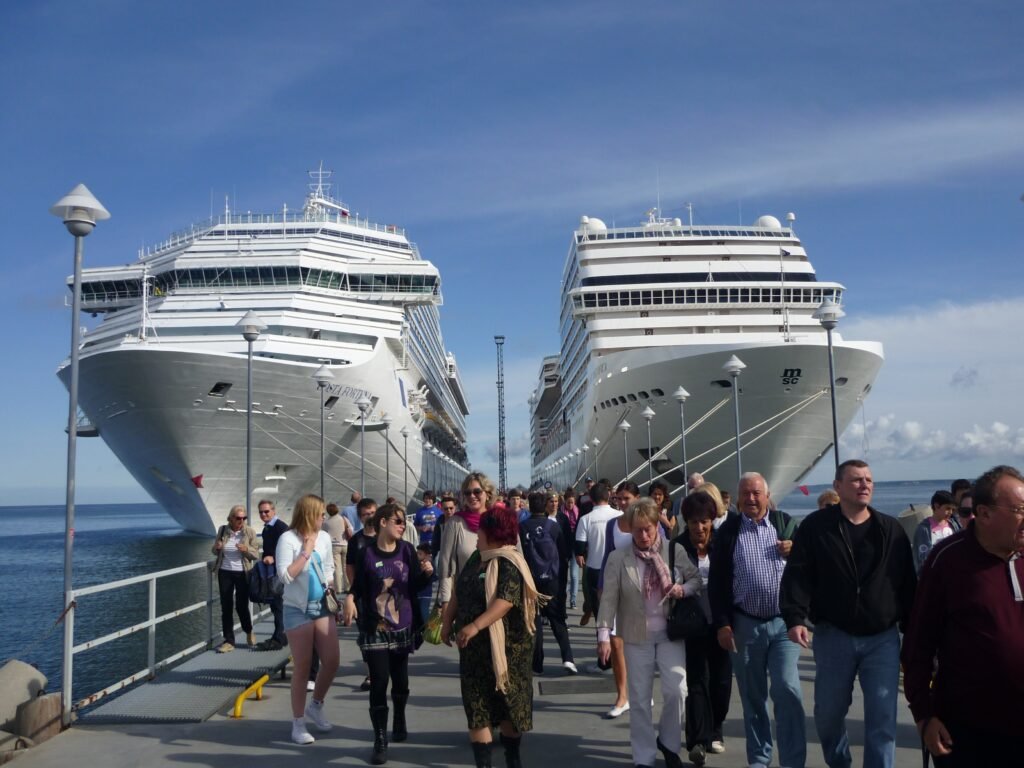
This is why many first-time cruisers prefer organized cruise shore excursions instead of exploring independently. This becomes even more important in situations like tender ports, where timing and organization matter more than usual.
The second filter is energy
The second filter is energy. Once fear is addressed, energy takes control. People ask themselves questions they rarely say out loud:
Do I feel like walking today?
Do I want structure or freedom?
Am I already tired?
These questions matter more than the quality of the destination. An excellent excursion on a low-energy day feels like a mistake. A modest one, on the right day, feels perfect.
This is also why the best shore excursion is not always the most popular one, but the one that matches your energy that day.
You notice it later. This is also why people feel very different on sea days, when there is no pressure to choose or plan anything.
The social factor
Shore excursions are rarely chosen randomly. Couples negotiate, families compromise, groups tend toward consensus. Often, one person’s enthusiasm sets the direction, other times, one person’s reluctance limits it. And just like that, suddenly, excursions become social decisions more than personal ones.
Price is a signal, not a calculator
People talk a lot about price, but too few calculate it carefully. Instead, price acts as a signal:
- too cheap feels suspicious
- too expensive feels risky
So the middle ground feels safe. And we are not talking about any specific cruise logic, but about pattern recognition. People choose what feels proportionate to the day.
Many people assume they are comparing cruise excursion prices logically, but most decisions are based on perception, not calculation.
The role of descriptions (and their limits)
Excursion descriptions are meant to inform. In reality, they mostly reassure.
People look for:
- confirmation that they will not be rushed
- hints that others will enjoy it
- language that matches how they see themselves
Few read every line, usually, tourists scan the tone. I tell you from my own experience that a kind word brings a lot, so you will always be attracted to the agent who manages to speak as close as possible to your soul.
Why “exploring on your own” is chosen last
Independent exploration sounds attractive in theory. In practice, it requires confidence, tolerance for uncertainty, willingness to navigate unfamiliar places.
Many people appreciate the idea of independence more than the experience of it, and this often changes on later cruises, as familiarity grows.
Exploring on your own is often recommended as the best way to experience a destination, but it only works when you feel comfortable doing it.
Choosing between organized excursions and exploring on your own is one of the most common cruise decisions people struggle with. Excursion decisions are always tied to the structure of port days, when time and movement are more controlled.
When people change their mind
Excursion choices are not fixed. People cancel, switch, decide onboard. This usually happens after:
- a tiring day
- a surprising sea day
- a shift in mood
Cruise plans are flexible precisely because people are as well.
The excursion that feels best in retrospect
Interestingly, the excursions people remember most fondly are not always the most impressive, but generally the ones that matched the day. Good weather, the right pace, no pressure — these are the secrets nobody tells you.
A common misunderstanding
Many people believe there is a “best” way to choose shore excursions. There isn’t. There is only a way that aligns with how you feel that morning, who you actually are, what kind of day you want. Anything else is optimization after the fact.
A better way to think about choosing
Instead of asking: “what is the best excursion?”, go with the idea “what kind of day do I want to have?”. The answer is usually clearer than any description.
Frequently Asked Questions
How do I choose the best shore excursion on a cruise
The best shore excursion depends on your energy, comfort level and expectations, not just reviews or price.
Are cruise shore excursions worth it
They are worth it for convenience and safety, especially for first-time cruisers.
Should I explore on my own or book an excursion
It depends on your confidence level and how much structure you want for the day.
What are the best shore excursions on a cruise
The best ones are those that match your mood, not necessarily the most popular.
Do I need to book shore excursions in advance
Not always. Some of the best choices are made onboard.
Is it better to book excursions early
Sometimes, but flexibility also has value.
Are ship-organized excursions always better
No. They are just simpler.
Is staying onboard a waste
No. It is often a deliberate choice.
Will I regret skipping an excursion
Only if you wanted something else and ignored it.
Final details about shore excursions
People do not choose shore excursions to see places, but, surprisingly, to find out more about themselves, to learn themselves. Once you understand this, the pressure disappears. You stop trying to make the “right” choice and start making the one that fits — quietly, without justification.
And this is usually the choice that stays with you. Just as, dear colleagues, this cold glass of Sauvignon that has just been brought to me will. That’s how it is on a cruise — you, still in the newsroom?
Oh! If you want to understand how all these moments connect into the full cruise experience, it helps to see how everything unfolds step by step.